

Introduction: Beyond the Buzzword
In recent years, blockchain has become a staple in discussions about the future of technology. From disrupting financial systems to revolutionizing supply chains, the term is often wielded with promise—but also with a haze of confusion. Despite its association with cryptocurrencies like Bitcoin, blockchain is far more than a digital ledger for digital coins. At its heart, it is a trust machine—a new architecture for ensuring integrity, transparency, and decentralization in a world increasingly defined by data.
To appreciate blockchain’s true potential, one must look beyond the headlines and understand the elegant simplicity—and complexity—that underpins this groundbreaking technology.
What is Blockchain? A Simple Explanation for a Complex System
At its core, blockchain is a distributed ledger technology (DLT). It records information across a network of computers in a way that ensures the data is secure, transparent, and unchangeable once verified.
Key Components:
-
Blocks: Digital containers that store batches of data or transactions.
-
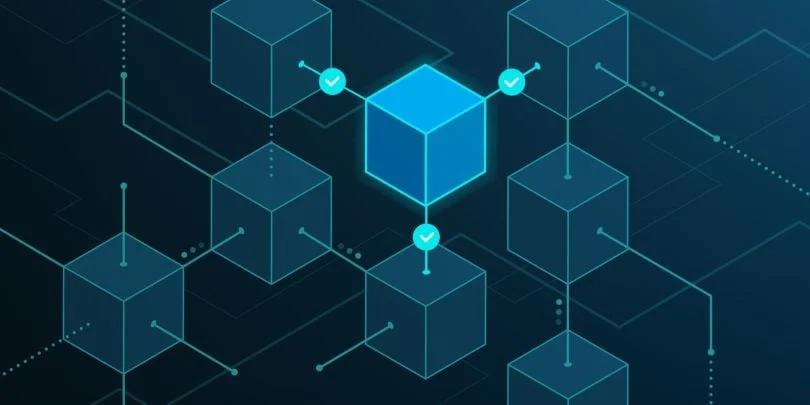
Chain: A chronological sequence of blocks linked together using cryptographic hashes.
-
Decentralized Network: Unlike traditional databases stored on centralized servers, blockchain is distributed across multiple nodes, each holding a copy of the full ledger.
-
Consensus Mechanisms: Rules for validating transactions and ensuring all nodes agree. These include Proof of Work, Proof of Stake, and emerging models like Proof of Authority.
Once a block is validated and added to the chain, altering any part of it would require redoing all subsequent blocks—an effectively impossible task given sufficient network size and computational power.
The Philosophy of Trustlessness
One of blockchain’s most revolutionary contributions is its redefinition of trust. Traditionally, trust is placed in institutions—banks, governments, corporations. Blockchain replaces institutional trust with mathematical trust.
-
Immutable Records: Once data is written to the blockchain, it cannot be retroactively altered without consensus from the network.
-
Transparency: Public blockchains are open to anyone to view and verify, enhancing accountability.
-
Permissionless Access: Many blockchains do not require approval to participate, enabling more democratic access to data and services.
This is not merely a technical shift; it is a cultural one. Blockchain offers a framework for rebuilding public confidence in an era of institutional erosion.
Real-World Applications: Far Beyond Cryptocurrency
While blockchain rose to prominence as the foundation for Bitcoin, its utility extends far beyond digital currencies. Industries across the globe are waking up to its potential.
1. Finance and Banking
-
Cross-Border Payments: Blockchain reduces transaction costs and speeds up international money transfers, eliminating intermediaries.
-
Smart Contracts: Self-executing contracts coded on the blockchain automate processes like loan approvals, insurance claims, and asset transfers.
2. Supply Chain Transparency
-
Traceability: From farm to table, blockchain ensures every step of the supply chain is recorded and verifiable.
-
Anti-Counterfeiting: Luxury goods, pharmaceuticals, and electronics can be authenticated through immutable digital records.
3. Healthcare
-
Medical Records: Patients can own and control their health data, which can be securely shared with providers.
-
Clinical Trials: Blockchain offers a tamper-proof method for recording trial data, boosting integrity in medical research.
4. Voting Systems
-
Secure Digital Voting: Blockchain can underpin tamper-proof electoral systems, reducing fraud and increasing trust in democratic processes.
5. Intellectual Property
-
Digital Ownership: Artists, writers, and creators can timestamp and tokenize their work, maintaining ownership rights and receiving royalties automatically.
The Challenges Ahead: Hype vs. Reality
For all its promise, blockchain is not without its limitations. Many initiatives have stumbled, not due to flaws in the technology itself, but from misaligned expectations and underdeveloped ecosystems.
Scalability
Public blockchains often struggle with transaction throughput. Bitcoin, for example, processes about 7 transactions per second—far less than Visa’s thousands. Solutions like layer-2 networks and sharding are being developed but are not yet fully mature.
Energy Consumption
Especially with Proof of Work systems, the energy usage required for mining has raised significant environmental concerns. While many networks are transitioning to more sustainable alternatives, the issue remains a pressing one.
Regulation and Legal Uncertainty
Governments around the world are still grappling with how to regulate blockchain-based systems. Questions around data privacy, digital identity, and legal enforcement of smart contracts remain unresolved in many jurisdictions.
Interoperability
With thousands of blockchains in operation, communication between them is limited. Projects like Polkadot and Cosmos are working to build bridges between networks, but achieving seamless interoperability is still a work in progress.
Blockchain’s Evolution: The Internet of Value
Just as the internet enabled the instant transfer of information, blockchain enables the instant, secure transfer of value. This shift has given rise to what many are calling the Internet of Value—a new paradigm where ownership, identity, and trust are digitally native and inherently decentralized.
Emerging Trends:
-
Decentralized Finance (DeFi): An ecosystem of financial applications built on blockchain, offering services without intermediaries.
-
Non-Fungible Tokens (NFTs): Unique digital assets stored on blockchain, transforming ownership of art, collectibles, and even real estate.
-
Decentralized Autonomous Organizations (DAOs): New forms of governance where decisions are made by stakeholders through blockchain-based voting mechanisms.
Each of these developments pushes the boundaries of how we define coordination, commerce, and community in the digital world.
Conclusion: A New Infrastructure for a New Age
Blockchain is not a panacea. It is not meant to solve every problem, nor should it be applied indiscriminately. But when used thoughtfully, it offers a radical reimagining of how we structure trust, ownership, and information in the digital age.
Like the early internet, blockchain is still in its formative years—experimental, fragmented, and often misunderstood. But history has shown that foundational technologies often start this way. As infrastructure improves, regulations mature, and societal understanding deepens, blockchain may very well become the silent architecture beneath much of our digital lives.
It is no longer a question of if blockchain will change the world, but rather how—and who will shape that transformation.
