

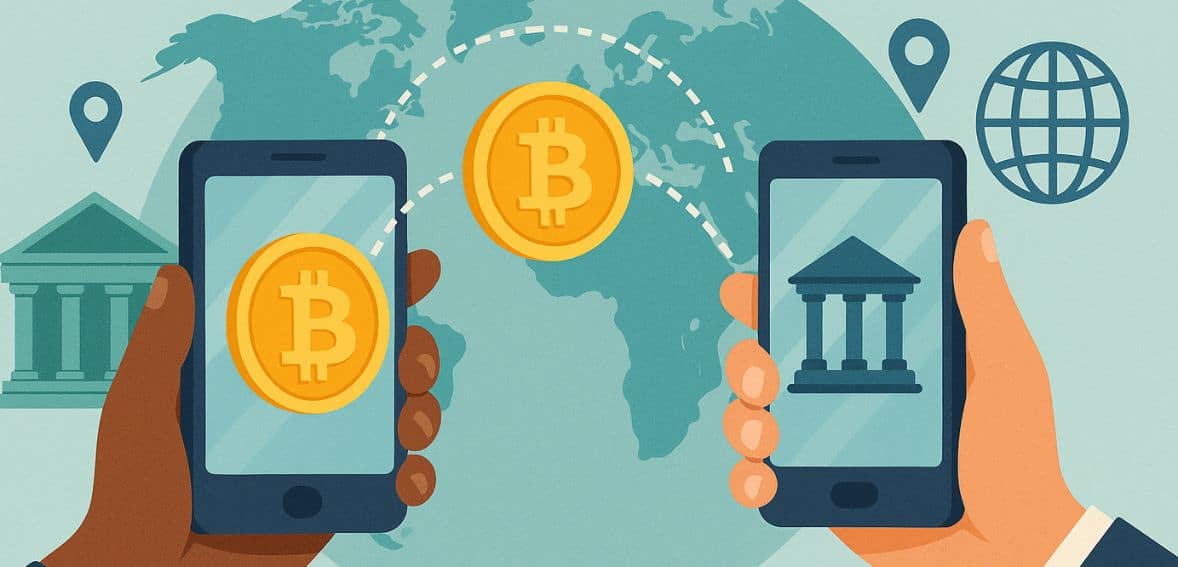
Global commerce relies heavily on the movement of money across international boundaries, yet traditional banking networks continue to rely on slow, expensive legacy infrastructure. Sending funds across borders through conventional wire transfers or international banking systems typically involves multiple intermediary institutions, high conversion fees, and processing times that stretch across several business days. These persistent delays and hidden costs create massive friction for individuals supporting families abroad and businesses managing international supply chains. Cryptocurrency and blockchain networks offer a transformative alternative, bypassing legacy gatekeepers entirely to enable fast, transparent, and cost-effective cross-border settlements.
The Inefficiencies of Legacy Cross-Border Remittances
Traditional international money transfers operate through correspondent banking networks established decades ago. When a sender initiates a wire transfer from one country to another, the money rarely moves directly from the source bank to the destination bank.
-
Multiple Intermediaries: Transfers frequently pass through several correspondent banks, with each institution deducting a processing fee along the journey.
-
Exchange Rate Markups: Traditional providers often apply unfavorable foreign exchange rates, adding hidden costs that reduce the final payout amount.
-
Processing Delays: Weekend closures, manual compliance checks, and time zone discrepancies can trap funds in transit for up to five business days.
These structural inefficiencies make traditional remittances burdensome, particularly for smaller transactions where fixed fees consume a significant percentage of the total amount sent.
How Blockchain Streamlines International Transfers
Cryptocurrency networks eliminate the need for correspondent banking chains by utilizing decentralized ledgers that settle transactions directly between peers. Because blockchain infrastructure operates globally without regard to national borders or banking hours, international payments process with the same speed and efficiency as local text messages.
-
Direct Peer-to-Peer Settlement: Senders and receivers interact without intermediary clearinghouses, reducing potential points of friction and failure.
-
Continuous Availability: Blockchain networks operate twenty-four hours a day, three hundred sixty-five days a year, enabling instant transfers during weekends and holidays.
-
Transparent Tracking: Every transaction is permanently recorded on a public ledger, allowing both parties to track fund status in real time.
This architectural upgrade removes the geographical barriers that have historically complicated international trade and personal remittances.
The Role of Stablecoins in Reducing Volatility
While native cryptocurrencies experience rapid price fluctuations, the emergence of stablecoins has revolutionized international payments by combining blockchain speed with fiat currency stability. Stablecoins are digital tokens pegged directly to traditional reserve currencies like the US dollar, maintaining a stable value regardless of broader market movements.
-
Predictable Value: Senders and recipients do not have to worry about asset depreciation during the transfer window.
-
Instant Liquidity: Stablecoins can be converted back into local fiat currency rapidly through local exchanges or digital wallet providers.
-
Low Transaction Fees: Transferring dollar-pegged tokens across optimized blockchain networks costs a fraction of a cent compared to traditional wire fees.
These characteristics make stablecoins the preferred vehicle for businesses and individuals executing high-volume cross-border transactions.
Financial Inclusion for Unbanked Populations
Millions of people around the world lack access to traditional banking services, making it extremely difficult for them to receive international financial support from family members working abroad. Cryptocurrency bridges this gap by requiring only a smartphone and internet connectivity rather than a physical bank account.
-
Self-Custody Wallets: Users can download secure digital wallets instantly, bypassing lengthy bank approval processes and minimum balance requirements.
-
Reduced Overhead: Direct transfers empower migrant workers to send full support payments home without losing heavy portions of their hard-earned money to high-fee remittance agencies.
-
Economic Empowerment: Access to decentralized financial tools allows unbanked individuals to participate in the global digital economy on equal footing.
This democratization of financial access fosters economic growth in developing regions by streamlining capital inflows from international labor markets.
Regulatory Compliance and Security Measures
As digital asset adoption expands globally, regulatory frameworks are evolving to ensure that cross-border cryptocurrency payments remain secure and compliant with international law. Governments and financial intelligence units work closely with digital asset platforms to prevent illicit financial flows while preserving user privacy.
-
Identity Verification Protocols: Reputable platforms enforce strict know-your-customer guidelines to verify user identities before facilitating international transfers.
-
Blockchain Analytics: Advanced chain surveillance tools help regulatory bodies and compliance officers trace suspicious transactions and deter financial crimes.
-
Institutional Adoption: Major financial institutions are increasingly integrating compliant blockchain rails to modernize their own cross-border settlement services.
Balancing decentralization with regulatory compliance ensures that cryptocurrency payments can scale safely within the global economic framework.
Frequently Asked Questions
Why are traditional wire transfers so much slower than cryptocurrency payments?
Traditional wire transfers rely on legacy messaging systems and a multi-tiered network of correspondent banks that must manually verify, clear, and settle transactions sequentially. Cryptocurrency payments bypass these human bottlenecks by utilizing automated, decentralized ledgers that achieve final settlement in minutes.
Do I need to understand how blockchain technology works to send a crypto payment?
You do not need deep technical knowledge of blockchain mechanics to use cryptocurrency for payments. Modern digital wallets and financial applications feature streamlined, user-friendly interfaces that resemble standard mobile banking apps, hiding complex cryptographic processes behind simple buttons.
How do recipients convert cryptocurrency into local cash in another country?
Recipients can cash out digital assets by transferring them to a local cryptocurrency exchange or partnering financial service that supports direct conversion into local fiat currency. The funds can then be withdrawn to a local bank account or retrieved through supported mobile money networks.
What are gas fees and how do they impact cross-border transfers?
Gas fees are transaction costs paid to network validators to process and secure transactions on a blockchain. While some public networks experience high congestion fees during peak periods, many optimized layer networks and stablecoin rails offer near-zero transaction costs for cross-border senders.
Can cryptocurrency transactions be reversed if I send funds to the wrong address?
Cryptocurrency transactions are final and immutable once confirmed on the blockchain. Unlike credit card payments or bank wires, there is no central customer service desk or bank authority capable of reversing a completed blockchain transfer, making address verification essential before sending funds.
Are there limits on how much money I can send internationally using cryptocurrency?
Public blockchain networks do not impose arbitrary financial limits on transaction sizes, allowing users to transfer small amounts or massive fortunes alike. However, centralized crypto exchanges and onboarding ramps often enforce daily or monthly transaction caps based on user verification tiers and local regulatory laws.
